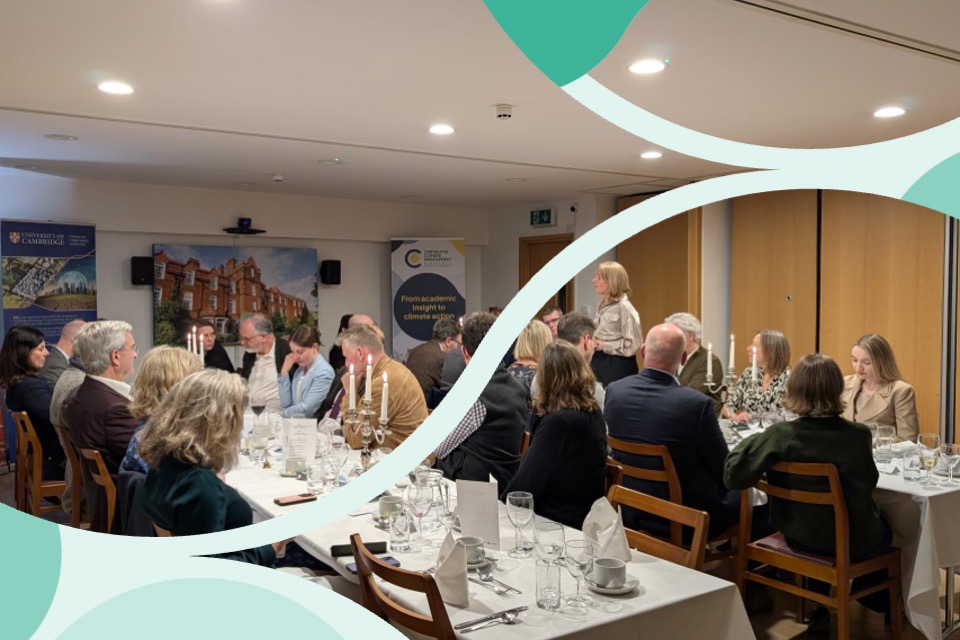
The Centre for Climate Engagement (CCE) at Hughes Hall, Cambridge, in partnership with the University of Cambridge Institute for Sustainability Leadership (CISL) and Zero Ideas, convened an invitation-only discussion on 24 March 2026 to explore citizen’s consent as a critical enabler of climate and nature action.
The event brought together 30 senior representatives from local authorities, policy, business, finance, and Cambridge-based academics. Building on recent research published jointly by CISL and Zero Ideas, Restoring Human Progress: Winning Citizen’s Support for Actions on Climate and Nature, the event provided a space for dialogue among the high-level stakeholders across sectors to actively engage on the paper’s core insights and exchange broad-ranging perspectives on how these could be applied in their own contexts.
The discussions centred on two themes drawn from the research: what it means to restore human progress in societies where citizens feel it has stalled, and how to deliver meaningful gains at by bringing citizens, government, and business together to shape a better future.
This event was moderated by Simon Glynn, Founder of Zero Ideas, and Gillian Secrett, CISL Fellow.
Key Takeaways
1. Restoring human progress
- Difficult to envision a future with no existing role models. Wealthy countries have no clear examples to draw from, making future visioning less about predicting and more about creating something new.
- Aspirations sit in human experience, not material growth. Themes of wellbeing, meaningful work, community, purpose, and being valued stood out as core to a sense of progress.
- Financial pressure dominates daily life. Despite national wealth, many people do not feel wealthy; inequality and cost-of-living pressures shape public attitudes more than abstract progress narratives.
- Leadership is the missing ingredient. There is a need for long-term, confident leadership from government and business. Public engagement only works if leaders follow through, and meet people’s needs where they are currently, unmet expectations erode trust quickly.
2. Delivering meaningful gains
- Communicate what is already working. There is a significant opportunity – and challenge,
(particularly through media)– in making existing progress visible and relatable.
- “Sector” is one way of identifying tangible change – but community was also identified. There was suggestion of framing benefits by place or community, especially in rural areas and the built environment, where tangible improvements matter.
- Energy is the immediate opportunity. The ongoing energy crisis creates strong public appetite for affordable, secure, homegrown solutions and consistent energy prices.
- Culture and creativity matter. Beyond technology and policy, cultural and creative sectors can help articulate the human and values-driven story of the transition.
- Deliver outcomes people feel today. Improvements such as comfortable homes, healthier food, cleaner environments and stronger local communities resonate more than abstract long-term targets.
- Reinforcement of playing to national strengths. Domestic strengths provide a credible starting point that builds public confidence, and national strategy responsive to shifting global context such as the scale and pace of transition in countries such as China and India can sharpen both ambition and competitive edge.