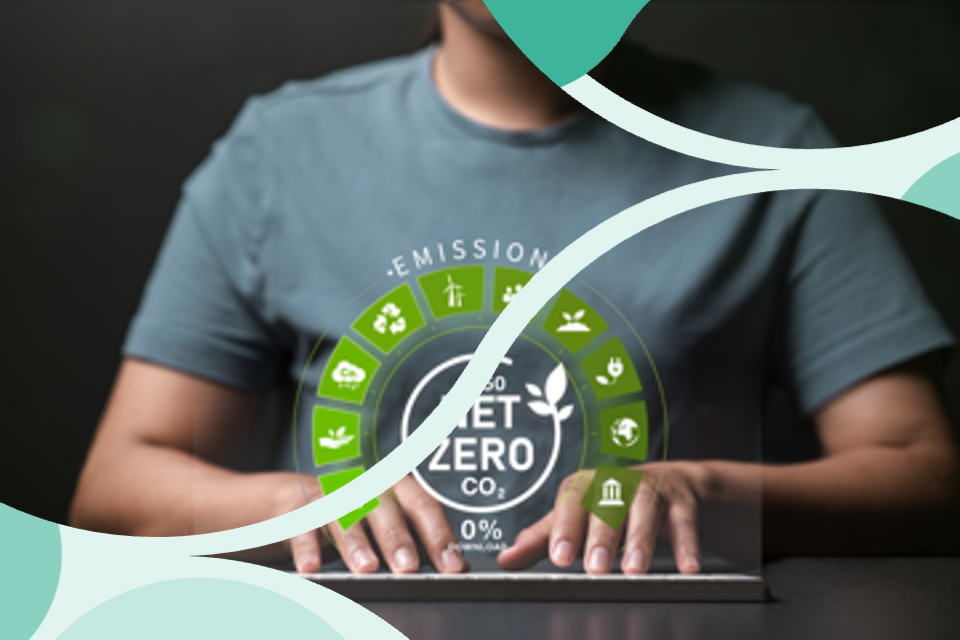
Join this lively session on the rise of AI and its impact on climate and nature, with perspectives from law, business, policy, and research.
Cambridge Festival, Green Week at Hughes Hall and Cambridge Climate Week
AI is accelerating fast—but what does that mean for the climate and nature? This panel will explore whether we need new rules to govern AI’s environmental impacts, and if so, what should they look like? Join us for a lively discussion across research, policy, and industry perspectives.
As part of the Cambridge Festival, Green Week at Hughes Hall, and the Cambridge Climate Week, this panel event on Regulating AI for Climate and Nature will take place on Wednesday 18 March, 16:00–17:30, followed by a networking reception from 17.30–19:00. The event will open with a keynote from Yu-Ting Kuo, Hughes alumnus and Corporate Vice President at Microsoft, where he leads the company’s Agent AI development. He will also take part in the panel discussion, to be chaired by Professor Harro van Asselt, Hatton Professor of Climate Law.
Additional speakers include:
- Lynn Dicks, Professor of Ecology at the Department of Zoology and the Conservation Research Institute.
- Dr Loïc Lannelongue, Assistant Research Professor at PHPC, and PI of the Cambridge Sustainable Computing Lab.
- Alumna Giulia Trojano, Senior Associate and AI expert at Hausfeld.
- Richard Turner, Professor of Machine Learning in the Department of Engineering at the University of Cambridge and Research Lead for AI for Weather Prediction at the Alan Turing Institute.
Places are limited – book your space via the Eventbrite link (bookings open for Hughes Hall from 9 February, and to the general public on 16 February). Live streaming will be available, the link will be provided to those registered below on the live stream option.
The discussion will explore key questions at the intersection of policy, climate, nature and artificial intelligence, drawing on insights from a recent working paper titled Regulating the AI-Climate Nexus, authored by Nick Scott, Manager for Law and Climate Action at the Centre for Climate Engagement.
Panellists will consider how policy and regulatory measures can respond to AI’s environmental impacts, how the policy response can manage environmental risk while seizing AI-related opportunities, and whether this requires specific regulation or integration with existing measures.
Speakers
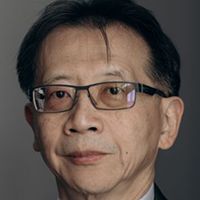
Yu-Ting Kuo is Corporate Vice President at Microsoft, where he leads the company’s Agent AI development. After an initial 25-year career at Microsoft, during which he pioneered Azure AI services and founded Microsoft’s Computer Vision Product Group, and AI research and development centers in Belgrade, Cambridge (UK), Taipei, and Zürich, he returned in 2024 to advance the next generation of agentic AI technologies. Kuo is also a faculty member at both MIT Sloan and the Department of Computer Science at National Tsing Hua University.
Yu-Ting also serves on the Executive Board of the MIT Sloan School. His research and teaching focus on the ethical deployment of AI, the intersection of technology and business, and the societal impacts of innovation. A recognised thought leader in AI ethics and innovation, Kuo was named by Business Insider as one of the power players leading artificial intelligence at Microsoft. His pioneering work in cloud AI services, honored with the inaugural Asian American Luminary Award in Science and Engineering Innovation, is also featured in the 2025 book The Insider’s Guide to Innovation at Microsoft. In 2020, he was named a distinguished alumnus of the College of Science at National Tsing Hua University.
A former student of Hughes Hall, Yu-Ting remains deeply committed to AI for good, supporting education through bursaries, including at Hughes Hall, and mentoring the next generation of technology leaders.
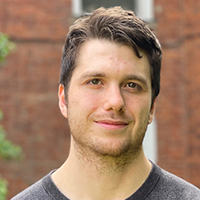
Nick Scott leads the Centre’s ‘Law for Climate Action’ programme, which engages academics, legal practitioners, and corporates to determine legal solutions to the climate crisis. This includes finding ways to leverage existing legislation to address climate change, and also investigating emerging climate law and policy measures, particularly those relevant to business. Nick has law degrees from the University of Cambridge and the University of California, Berkeley.
The discussion will explore key questions at the intersection of policy, climate, nature and artificial intelligence, drawing on insights from a recent working paper titled Regulating the AI-Climate Nexus, authored by Nick Scott, Manager for Law and Climate Action at the Centre for Climate Engagement.
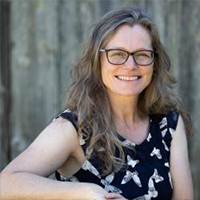
Professor Lynn Dicks is Professor of Ecology at the Department of Zoology and the Conservation Research Institute. She is a conservation scientist focused on insect conservation, transitions to sustainable agriculture and high quality evidence synthesis. She co-authored an article in Nature called ‘Will AI speed up literature reviews or derail them entirely?‘
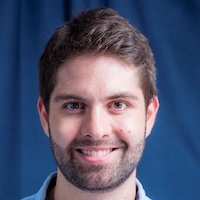
Dr Loïc Lannelongue is Assistant Research Professor at PHPC, and PI of the Cambridge Sustainable Computing Lab. Loïc is particularly interested in understanding and mitigating the environmental impacts of modern computing and its usage, including AI. Passionate about environmental sustainability and responsible science, he is interested in multi-faceted approaches to this issue, combining technical, behavioural and policy work

Richard Turner is a Professor of Machine Learning in the Machine Learning Group at the University of Cambridge and a Research Lead in AI for Weather Prediction at the Alan Turing Institute. He is also the Cambridge Lead for the EPSRC Probabilistic AI Hub.
His previous roles include Visiting Researcher at Microsoft Research within the AI4Science and AI teams, Co-Director of the UKRI Centre for Doctoral Training in the Application of Artificial Intelligence to the study of Environmental Risks (AI4ER CDT), and Course Director of the Machine Learning and Machine Intelligence MPhil programme.

Giulia Trojano is an alumna and Senior Associate at Hausfield. She has strong expertise in AI related topics such as competition, data protection and ethical and privacy concerns. Giulia has been recognised in the prestigious 100 Brilliant Women in AI Ethics™ 2025 list and in the Top 50 Fintech, TMT & AI lawyers in 2024 and has published in peer-reviewed journals including, most recently, Oxford Intersections on whether the legal landscape is ready for digital companions. She holds an MSt in AI Ethics & Society from the University of Cambridge, graduating with a first.
With thanks to our event partners Cambridge Zero, the Conservation Research Institute, Cambridge Institute of Sustainability Leadership, and the Cambridge Climate Society.